
Open today · 9:00–5:30
Est. 1982 (559) 222-2646
Home/ Learn/ Coin Collecting Guides

Coin collecting guides

Forty-four years of counter conversations, written down. Start here if you've inherited something, if you're curious, or if you're eight years old and your grandfather just handed you a Morgan dollar.

Rule one: never clean a coin

If you read nothing else on this page, read this. Cleaning destroys more value in this hobby than theft, fire and flood combined.

That dull grey film is toning — decades of the metal reacting with the air. Collectors pay for it. A polish, a dip, even a firm rub with a cloth leaves microscopic hairlines that a grader spots instantly, and the coin comes back in a details holder worth a fraction of the straight grade. It cannot be undone.

◆ The four-second mistake

We have watched people wipe thousands of dollars off a coin in the parking lot, trying to make it look nice for us. If it looks dirty, it is supposed to look dirty. Bring it exactly as you found it.

How grading works

Coins are graded on the Sheldon scale, 1 to 70. 1 is barely identifiable; 70 is flawless under magnification. The jump from one grade to the next can double a coin's value — which is why an independent opinion matters so much.

  • P–FR 1–2 — Poor to Fair. Worn nearly smooth.
  • G 4–6 — Good. Heavily worn, major design visible.
  • VG 8–10 — Very Good. Design clear, details flat.
  • F 12–15 — Fine. Moderate wear, some detail.
  • VF 20–35 — Very Fine. Light wear on high points.
  • EF/XF 40–45 — Extremely Fine. Slight wear, most detail sharp.
  • AU 50–58 — About Uncirculated. A trace of rub only.
  • MS/PR 60–70 — Mint State / Proof. Never circulated; graded on marks, strike and lustre.

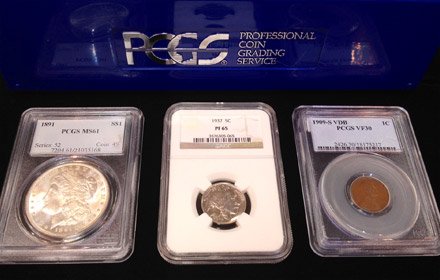
PCGS and NGC assign these grades independently and seal the coin in a holder. We're an authorized dealer for both — we submit, they grade.

What makes a coin worth more than its silver

Four things, roughly in order:

  • Rarity — how many were struck, and how many survive
  • Grade — condition, on that 1–70 scale
  • Demand — a rare coin nobody collects is just a rare coin
  • Eye appeal — strike, lustre and toning; two coins at the same grade can differ a lot

Key dates, semi-keys, and mint marks

A key date is the scarce year in a series — the one that makes a set hard to finish. In Morgan dollars, an 1893-S is a key; a common 1921 is not, despite looking nearly identical to a beginner.

The tiny letter is the mint mark: CC (Carson City), S (San Francisco), O (New Orleans), D (Denver), P or none (Philadelphia). On the right series, that one letter is the entire difference between $40 and $4,000 — which is precisely why you shouldn't guess from a photo on the internet.

Storing it properly

  • No PVC. Soft, flexible plastic flips leach a green residue that etches the surface. Use inert Mylar or archival holders.
  • Hold the edge. Fingerprints are acidic and permanent on a mint-state coin.
  • Keep it dry. Humidity is what makes spots. The Valley is kind to coins; a damp garage is not.
  • Leave slabs alone. Certified holders are already the right answer. Don't crack them out.
  • Leave original packaging intact. Mint sets and proof sets are worth more in their original government packaging.

If you're starting out

Collect what you actually like, not what someone tells you will appreciate. Buy the book before the coin — a Red Book costs less than lunch and will save you a hundred times its price. And come stand at a case: forty minutes with someone who knows the series beats forty hours of forum posts.

Heather Heinks brings her 10 and 6 year old boys here, and our staff "treat them with sincerity and encourage their curiosity in coin history and collecting." There's no minimum age and no minimum budget.
In the Cases

Come and look at some.

PCGS and NGC graded coin slabs
Certified & SlabbedThe grade isn't our opinion — it's PCGS's or NGC's.
Morgan silver dollars in a collector case
Morgans & Peace DollarsWhere most collectors start, and where many stay.
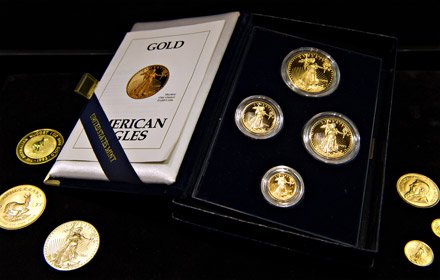
American Gold Eagle proof set
GoldEagles and classic US gold — bullion and numismatic both.
Keep Reading

More from the Learning Center.

Bring it in dirty.

Free verbal read, no appointment, no obligation — and no pressure on anyone, including your kids.