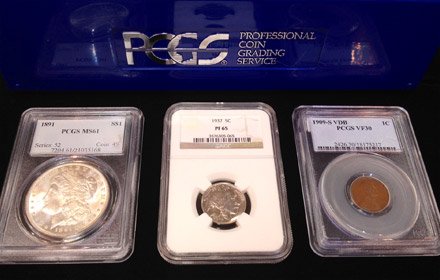
For most of the twentieth century, a coin's grade was whatever the seller said it was. Two people could look at the same coin and disagree by three points — which, on a scarce date, is thousands of dollars. The whole hobby ran on trust and argument.
PCGS and NGC fixed that. An independent expert grades the coin, seals it in a tamper-evident holder with the grade on the label, and stakes their reputation on it. It stops being our opinion versus yours, and starts being a fact you can resell anywhere in the country.
Grading costs money per coin, plus shipping and insurance. If your coin's certified value wouldn't clear the fee — which is true of most coins most of the time — we'll say so and hand it straight back. An honest "don't bother" is free, and it's the answer more often than not.
This is the single most expensive mistake in the hobby. That "dull" toning is decades of natural surface, and a polish or a dip can take a coin from a straight grade to a details holder in about four seconds. If it looks dirty, leave it dirty and bring it to us dirty.
Bring it anyway. We buy certified coins, we lend against them, and we can talk through crossovers and regrades — though we'll usually tell you the existing holder is fine and the fee isn't worth it.
A free pre-screen from an authorized PCGS and NGC dealer — including an honest "this isn't worth the fee" when that's the answer.